A surface storm hits a manned mission to Mars, leading to the apparent death of one of the astronauts. After the group of astronauts does an emergency ascent and departure, some of the people monitoring things back on Earth realize the dead astronaut is still alive but in danger of starving to death if they can’t figure out a way to save him.
What I Liked
I didn’t know what to expect from the book, even though there was lots of noise about the movie way back during various award seasons. I vaguely remembered that the movie has Matt Damon on Mars by himself but not any of the details. The book gets to the heart of the crisis right away. Chapter 1, Mark Watney is stranded on Mars. Chapters 2+? Mostly about Mark figuring out how to a) stay alive for more than a year if anyone is to save him and b) communicate with NASA. Most of the book is in Mark’s own head, which makes for not a lot of dialogue, until the 15% point and then the 40% point again as the story expands. Yet the “find the problem, work the problem, solve the problem” approach to everything makes it surprisingly understandable and relatable.
What I Didn’t Like
I could quibble about some of the writing being a bit basic in places, particularly for the politics stuff back on Earth, but it isn’t enough to take away from the superb story.
A woman running from something shows up with her kids at a remote island port to paint a mural in a lighthouse.
My Reactions
The initial premise focused on the lighthouse, women being accused of witchcraft, and missing children. However, while there are elements of witchcraft history, it is surprisingly almost secondary to the premise of the tale, which takes place across three timeframes — the past history of women and witchcraft, along with demons who seem to steal children’s souls; the current tale of the woman painting the mural while raising three kids; and the future tale of one of the kids 20 years later.
As you go through the potential risk of missing kids, an element of demons or evil fae comes in where the missing children are replaced by evil replicants of the original child. It’s much more of a supernatural element than I was expecting, and the story shifts from one of witchcraft to moral tales of women killing their children to save the others. Very dark.
For my overall reaction though, I have to give a SPOILER ALERT. It’s almost impossible to explain my disappointment without reference to the revelation that there isn’t much going on for evil or devilry … there’s a time portal under the lighthouse and people pass through it only to come back at a different stage of life. The weird part is that everyone is focused on the children, but they are NOT the only passengers. At that point, the story falls apart for me. It isn’t just children who are “duplicated”, yet that is the tale. And I love time travel, so that wasn’t the problem for me — it was that there is this “fake” explanation for what’s going on, with tons of time spent on it, and weirdness galore. Followed by the real explanation that is rather hum-drum. Including Children’s Services not seeing any problem with the age of a child changing by 20y.
I was very disappointed against the original description.
An opening on a town council creates turmoil in the community as various members jockey for position.
My Reactions
Described as Rowling’s first novel for adults, I was looking forward to reading it, and the first descriptions seemed almost like a Jeffrey Archer novel of small-town political intrigue. I got it as a hard copy for Xmas (or maybe my wife did?). And after she read it, I ended up setting it aside for a bit before coming back to it. Which turned into years. She wasn’t that excited by it, and so I didn’t dash to it. Now that I’ve read it, I totally get her reaction.
It’s generally depressing from one end to the other. Some reviewers described it as “darkly comic” but I didn’t see anything comic. Maybe the rape of a teen? The completely dysfunctional families? The poverty? The adultery? The death of children?
I couldn’t find hardly a single character to care about, more like a low-rent version of Friday Night Lights without any source or inkling of success by anyone. The writing is fine, just the story sucked.
I rarely pick up an ebook from the Amazon collection of First Reads and promptly pass on it once I get it. I don’t take just anything, I’m a bit picky in adding something to my TBR list, but a name like Alice Hoffman is a good selling point. Strong history, good writing, and it was just a short story called “The Bookstore Sisters”. It had elements of a backstory, something that went wrong between two sisters that inherited a bookstore, etc. Sounded interesting, perhaps.
So I gave it a go. It was a bit off-putting with some of the, well, “hatred” or aggression that seemed to permeate the first bit. Like characters who don’t just dislike each other, or that might be a bit dysfunctional, but more undercurrents that the people are just not very nice to begin with. It’s hard to put a finger on examples in the first pages. Maybe it is the constant whining from the sister who stayed, “Well, you did this and this and this and this and this and this,” aka emotional blackmail of “if you loved me, you’d do this.”. The sister who left should have told her to sod off.
But what turned me off was the 40% mark. The sister who stayed has a daughter who wrote asking for help, and when the prodigal sister returns, the niece is even at the ferry with a sign that says “Help” on it. Really? Makes no sense, honestly. And as the returning sister is about to get off, the niece is waving to her. Okay, I guess. But then here is how the niece greets her:
“It took you long enough,” Violet said. “You’re the last person off.”
“You don’t look anything like my mother.”
“You do,” Isabel said.
“I’m nothing like her,” Violet said. “But you wouldn’t know since you don’t know the first thing about me. I found your address on an old envelope in my mother’s night table drawer. I didn’t know if you’d really come, but now that you’re here, maybe you can help for once in your life. Just don’t expect me to like you.”
The bold is added by me. Right. So an 11yo needs help, writes to the aunt she doesn’t know, and greets her with the phrase “help for once in your life”. And the aunt goes “okey dokey”? Seriously?
First of all, the 11yo would NOT greet her like that after waving and playing with a dog, etc. Nor is any adult likely to take that “slap” from a kid. It’s rude and abusive, and I stopped reading immediately. I don’t care what happens in the rest of the story. If that is how you have people interact, every phrase some sort of emotional abuse, I’ll pass. In the instance, not only would I have ripped a strip off the kid verbally, I would have turned around, and left on the spot. If the main character is going to be a doormat, I don’t have much desire to read about them.
Is that overly harsh for a short story? Perhaps. But at least it was free. And 42000 other people reviewed it for a combined 4.1 review. Most of the reviews that are critical talk about the implausibility of it all, including the niece that I mentioned. Apparently, they all got even worse later in the story. Generally, the returning sister behaved with grace and accepted all slings and arrows to save the day. Yawn.
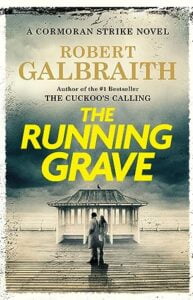
Robin goes undercover in a cult, attempting to retrieve a member of a client’s family. And while it’s definitely a cult, there is a thin veneer of logic to the approach with a touch of illusionist magic.
What I Liked
The scenes inside the cult are awesome, and undercover Robin is great. Well worth the price of admission, and if the previous book ended on a potential cliff-hanger relationship-wise, this one goes nuclear in the last few pages. And, fingers crossed, the Charlotte and Matthew residue is finally gone for good.
What I Didn’t Like
I’m still struggling with long stretches where not much is happening given the length of the books, as they drastically need more aggressive editing. I love the plots and characters, but man some parts just dragggggggggg.