Janeway and her crew are in desperate need of shore leave…and they receive an invitation from an uncharted planet to visit and enjoy the paradise nature of the lands. All is not necessarily as it seems, including the citizens’ treatment of their pets, the Neffaler, which seem surprisingly intelligent, almost sentient.
What I Liked
Good descriptive prose, with lots of little sub-stories — Kes’ pre-occupation and disturbing telepathic forces, Paris’ involvement with the daughter of the leader, and Torres’ desire to find the source of some dilithium signatures.
What I Didn’t Like
The sub-stories don’t come together as well as they could, so the overall story is long and rather confusing at times. Many of the characters seem “off” from their TV version, perhaps reflecting the author’s preoccupation with the characters’ lives early in the series’ history. Lots of descriptions are heavy on the visual, which would be impressive if it was a TV episode rather than a book, but it doesn’t work as well here. The ending is rather fragmented, focusing on three different groups’ actions at the same time.
The Bottom Line
Would have worked better as an episode than a book.
Easy Rawlins lives in L.A., 1948. He’s a black war veteran who just lost his job for mouthing off to the boss. Then a man comes along with an easy proposition: find a girl who was hanging out with the blacks at the jazz bars. While Easy needs the money to keep the little house he bought, he wants to know why the guy wants the girl found. Then he finds out others are looking too. Bodies pile up, having been worked over first, and the girl turns out to be connected to politics. While Easy finds the girl, it comes along with a lot of trouble from crooks, politicos, and cops who think he’s good for one of the murders.
What I Liked
The story moves, the characters are interesting, and the descriptions of the settings are well-written enough to give the reader the feel of each place in the story.
What I Didn’t Like
The characters may be interesting but are not well-developed. This story definitely has the feel of the pulp mystery fiction of the 50s and 60s, with lots of action, but no depth to the main characters. I never particularly cared about Easy, although I like the parameters of the character.
Peace in the Middle East is almost assured and two Concordes fly to New York with delegates for final negotiations. Terrorists try to derail the peace conference by planting bombs on board and taking the passengers hostage. After one plane is destroyed, killing all on board, the second plane is forced to land near Babylon. At the last minute, the hostages manage to escape to the top of a small hill from which they attempt to defend against the terrorists through several days of sorties, knowing that the military probably doesn’t know where they are and therefore can’t swoop in and rescue them.
What I Liked
Long before there was Clancy, there was DeMille. This book takes the international realm and stands it on its ear — there are (excruciating) details of the relations between the characters on both sides of the peace conference who are forced to work together to fight the terrorists. In addition, the battle tactics are first-rate, the writing is almost perfect, and the story is superb as the “hostages” fight in small groups with every weapon they have — gas bombs from the plane’s fuel tanks, sounds from a war movie blasted over speakers to simulate larger weaponry, etc.
What I Didn’t Like
There are a LOT of characters at the start of this book and it is hard to keep track of them all. Up until the end, there are too many small sub-plots — some are good, and necessary to flesh out the experience, but not all of them. There are fewer characters by the end though and it helps speed up the plotting. However, the ending is a little over-the-top, resembling a scene from a Die Hard movie more than keeping with the slightly more realistic tone of the rest of the book. As well, there is a meeting between the hostage-leaders and the terrorist-leader that is absolutely surreal. The likelihood of both parties treating it like a military battle with truces, etc., is virtually nil but it was at least interesting to read.
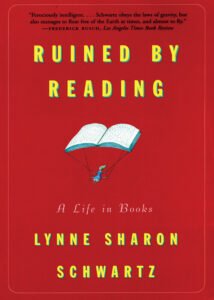
Schwarz starts with a commentary by a Chinese scholar that some people are handicapped by reading too much, and not thinking enough about what they read. From there, she looks at the books she has read in her life and the role they have played. It is not a heavy analytical tone throughout, but rather a personal commentary on the books that have been important to her in her life, and the elements of her life that took place in and around books.
What I Liked
There are a number of sections that are quite well done, such as:
Emptying your mind for meditation vs. filling it up during a life spent reading (pg. 14);
On the un-importance of the authors vs. the impact of the words themselves (pg. 17);
A life spent reading (pg. 96);
Choices of reading material (pg. 107);
Ruined by reading (pg. 114); and,
On self (pg. 119).
What I Didn’t Like
Some of the sections could have benefited from a bit more analysis and historical context, not just the personal impact on her own life.
Keller is a hitman. The contracts come from White Plains, from an unseen man upstairs and the man’s assistant named Dot. He gets the jobs and he does them. A pro…no mistakes. Life is good. And every time Keller goes to a new town, he gets real estate agents to show him houses he’ll never buy. Then he kills the target and goes home. And goes to therapy, gets a dog, gets a girlfriend, meets an agent from the government, and generally cruises through life piling up bodies. But there are always little problems — like the man who hires him through a front and then neglects to pay the second half. Or the two rivals who both hire Keller to kill the other and he has to choose which one. Or the three “innocents” that the government has him kill. In the end, he decides to retire. And find a hobby. And even that doesn’t work out as planned.
What I Liked
The character is interesting and business-like. He has trouble killing a man he likes because he knows the man is waiting for it and Keller had saved his grandson from drowning, so he is somewhat conflicted. And the search for explanations about his life and his past are at once both deep and superficial — deep questions that Keller can turn away from any time he wants and simply shrug. And mean it. On the lighter side, he uses various identities when he travels, identities of real people. So, just for fun, he occasionally calls the wives from the hotel he is staying in so that when the couple complains to American Express that they weren’t there, the call appears to be from them to their own home, just to mess with them. But then he feels guilty, so he sends the wife flowers from the husband – charged to the husband’s card, of course. And his depictions of some places in New York City were a nice “”homecoming”” since I was there a while ago and know all too well the places he was describing. Favourite lines:
“Keller, what difference does it make how Lyman Crowder pronounces his last name?” “I just wondered.” “Well, stick around for the funeral. See what the minister says.”
There were eight million stories in the naked city, most of them not very interesting, and he was one of them.
“He had killed a thousand miles to ride a woman he’d never met” (A deliberate misquote of a Louis L’Amour advertisement: “He rode a million miles to kill a man he’d never met”).
It was an unusual experience for him to travel under his own name and use his own credit cards. He sort of liked it, but felt exposed and vulnerable. Signing it at the restored downtown hotel, he wrote down not only his own name but his own address as well. Who heard of such a thing?
What I Didn’t Like
Some of the chapters seem somewhat disjointed, which is likely a reflection of the fact that many of the chapters appeared “as is” in magazines as short stories. The only other complaint is that in a couple of places the story jumps back to New York City a little too fast and the reader is left wondering exactly what happened and how he killed the target. Particularly for the guy who initially stiffs Keller on the second half of his fee — there is no explanation as to whether Keller kills him or not. He plans it but then has to go back to New York City suddenly. No explanation. A good set of stories overall, although it’s hard to get into the character since the character is presented as rather cold and superficial. Almost like a description of someone’s life in the past, it’s hard to feel tension or great interest in the day-to-day happenings.
Disclosure
I am not personal friends with the author, but I have interacted with them briefly on social media.